
In the age of radar, sensors, and satellites, remaining unseen is often more powerful than being fast or heavily armed. This is where stealth aircraft come in — sleek, dark silhouettes that glide through defended skies, striking targets before enemies even know they’re there.
From the mysterious F-117 Nighthawk of the Cold War to the advanced J-20 and B-21 Raider of today, the evolution of stealth aircraft tells the story of modern air power itself — a race not only for speed and firepower but also for invisibility.
What Is a Stealth Aircraft?

A stealth aircraft is an airplane engineered to minimize its visibility to radar, infrared sensors, and even the human eye. The goal is to delay or deny detection, allowing missions to be completed without interception.
Unlike conventional aircraft that reflect radar waves back to an enemy radar receiver, stealth aircraft scatter, absorb, or deflect those waves — appearing smaller or even invisible on radar screens. This property is called a low radar cross-section (RCS).
Stealth design extends beyond radar. Engineers also work to reduce:
- Infrared signatures (heat from engines)
- Visual profiles (camouflage and shape)
- Acoustic noise (quiet engines and flight paths)
- Electronic emissions (limiting detectable signals)
The Birth of Stealth: How It All Began

The idea of stealth aircraft originated during the Cold War, when the U.S. realized that faster planes alone couldn’t survive advanced Soviet radar and missile systems. Engineers needed something that radar couldn’t easily detect.
In the 1970s, using Soviet radar equations ironically borrowed from declassified papers, U.S. scientists developed the first faceted stealth design — leading to the Lockheed F-117 Nighthawk, the world’s first operational stealth aircraft.
The F-117’s flat surfaces and sharp angles deflected radar signals away rather than reflecting them back. Though it looked unconventional — almost alien — it worked spectacularly, remaining undetected in multiple missions, including the Gulf War in 1991.
The success of the F-117 proved that stealth aircraft were the future of air warfare.
How Stealth Aircraft Work
At the core of every stealth aircraft is design simplicity hiding extreme complexity. The science behind remaining undetected involves four key pillars:
1. Shaping and Structure
Stealth begins with shape. The aircraft’s body is built from curved or faceted surfaces that deflect radar waves away from their source.
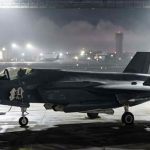
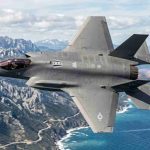
Modern stealth aircraft like the B-2 Spirit and F-35 Lightning II feature smooth, blended edges that make radar signals scatter rather than return to the radar antenna.
2. Radar-Absorbent Materials (RAM)
Even perfect shape can’t stop all radar reflections, so engineers coat the aircraft with radar-absorbent materials — polymers, iron particles, and carbon composites that absorb electromagnetic energy and convert it to heat.
3. Internal Weapon Bays
Traditional jets carry missiles or bombs under their wings, which reflect radar strongly. Stealth aircraft hide weapons inside internal bays, maintaining aerodynamic stealth profiles even while armed.
4. Infrared and Heat Management
Enemy missiles often track heat signatures. That’s why stealth aircraft shield or cool engine exhausts, bury engines deep inside fuselages, and mix cool air with hot gases to minimize thermal visibility.
These technologies combine to make a stealth aircraft appear like a small bird, or sometimes not at all, on enemy radar.
Types of Stealth Aircraft

Stealth technology isn’t limited to fighters; it extends to bombers, drones, and even naval aircraft. Here are the main categories:
Stealth Fighters
Designed for agility, air superiority, and tactical strikes.
- F-22 Raptor (USA) – unmatched air dominance fighter.
- F-35 Lightning II (USA) – multirole stealth fighter used globally.
- Chengdu J-20 (China) – China’s first large stealth fighter.
- Sukhoi Su-57 (Russia) – Russia’s 5th-generation stealth fighter.
Stealth Bombers
Large aircraft designed for long-range, deep-penetration missions.
- B-2 Spirit (USA) – flying-wing bomber capable of global reach.
- B-21 Raider (USA) – next-generation stealth bomber under testing.
- Xi’an H-20 (China) – projected long-range stealth bomber still under development.
Stealth Drones (UCAVs)
Unmanned aerial vehicles using stealth for surveillance and strikes.
- RQ-170 Sentinel (USA)
- nEUROn (Europe)
- GJ-11 Sharp Sword (China)
Each of these platforms pushes the definition of stealth aircraft forward, combining invisibility with autonomy, precision, and endurance.
Stealth Aircraft Around the World
US stealth Aircraft: The Pioneer
The U.S. leads the world in stealth aircraft innovation. With decades of research, it has operational fleets of F-22s, F-35s, and B-2s — plus the upcoming B-21 Raider, a futuristic stealth bomber designed for global strike missions.
Chinese Stealth Aircraft: The Rapid Challenger
China’s rise in stealth technology has been dramatic. The Chengdu J-20 is now one of the most advanced and largest stealth fighters in production, while the Xi’an H-20 bomber could give Beijing its first intercontinental stealth strike capability.
Russian and Other’s Stealth Aircraft
Russia’s Su-57 Felon and emerging Checkmate (Su-75) demonstrate efforts to balance cost and stealth, though production numbers remain limited. Meanwhile, nations like Turkey, South Korea, and India are developing their own indigenous stealth aircraft programs.
Why Stealth Aircraft Matter
The strategic advantage of stealth aircraft is simple: strike first, stay undetected, and survive.
In modern warfare, whoever sees first — wins first. Stealth platforms allow nations to:
- Penetrate deep into defended airspace.
- Conduct precision strikes without warning.
- Gather intelligence without provoking escalation.
- Serve as deterrence symbols in geopolitical rivalries.
Stealth aircraft also complement modern networked warfare — feeding live data to ships, ground stations, and other aircraft to create a “digital battlefield” where detection equals defeat.
Challenges and Limitations of Stealth
Despite their power, stealth aircraft are not invincible.
- High Costs:
Building a stealth aircraft is expensive — from advanced materials to maintenance of radar-absorbing coatings. - Maintenance Complexity:
Tiny surface imperfections can ruin radar invisibility. Ground crews must constantly inspect, clean, and reseal the aircraft’s surface. - Not Truly Invisible:
Stealth doesn’t mean “undetectable.” It means detection happens at a much shorter range. With multi-band radars, passive sensors, and networked defenses, even stealth aircraft can be tracked — though often too late. - Operational Trade-offs:
To maintain stealth, designers often sacrifice speed, external fuel tanks, and weapon capacity.
The Future of Stealth Aircraft
The future belongs to smarter stealth — aircraft that combine radar invisibility with AI-driven autonomy, directed-energy defense systems, and cooperative swarm tactics.
Next-generation projects like the B-21 Raider, Loyal Wingman drones, and China’s next-gen stealth fighters hint at an era where stealth is not just physical but digital — using electronic warfare, decoys, and AI algorithms to mislead sensors.
In the coming decades, stealth aircraft will become the backbone of global air forces, not only as strike platforms but as information hubs connecting humans and machines in one integrated defense network.
Conclusion: The Invisible Revolution
From the shadowy flights of the F-117 to the advanced data-sharing systems of the F-35, the evolution of stealth aircraft marks one of the most transformative chapters in aviation history.
These aircraft are not just engineering marvels — they are strategic game-changers. As nations race to master radar-evading technologies, the skies of the 21st century will increasingly belong to those who can remain unseen.
The age of stealth aircraft isn’t coming — it’s already here, reshaping how wars are fought and how peace is preserved through the silent power of invisibility.

2 thoughts on “Stealth Aircraft: Redefining Air Power in the 21st Century”
Comments are closed.