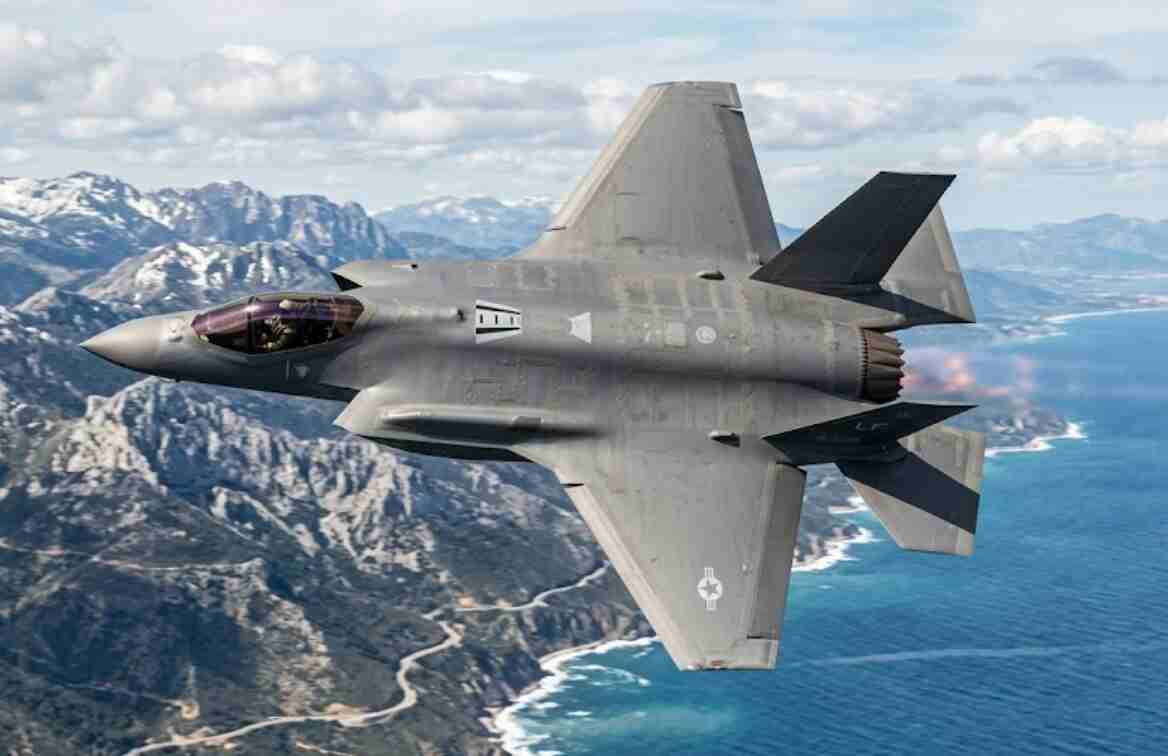
If you’ve followed modern air power even a little, you’ve probably heard about the Lockheed Martin F-35 Lightning II. Some call it revolutionary, others say it’s overrated. It’s been praised, criticized, debated—and still, countries keep buying it.
So what’s the real story? Let’s walk through it the way a curious reader naturally would.
First things first—what is the F-35?
At its core, the F-35 is meant to be a do-it-all fighter jet. It wasn’t built just to replace one aircraft, but several. That’s why it came out of a massive program led by Lockheed Martin, aiming to create a single platform for different branches of the military.
Instead of specializing in just one role, the F-35 handles:
- Air combat
- Ground strikes
- Reconnaissance
- Electronic warfare
That flexibility is a big part of why it’s so important.
Why are there different versions?
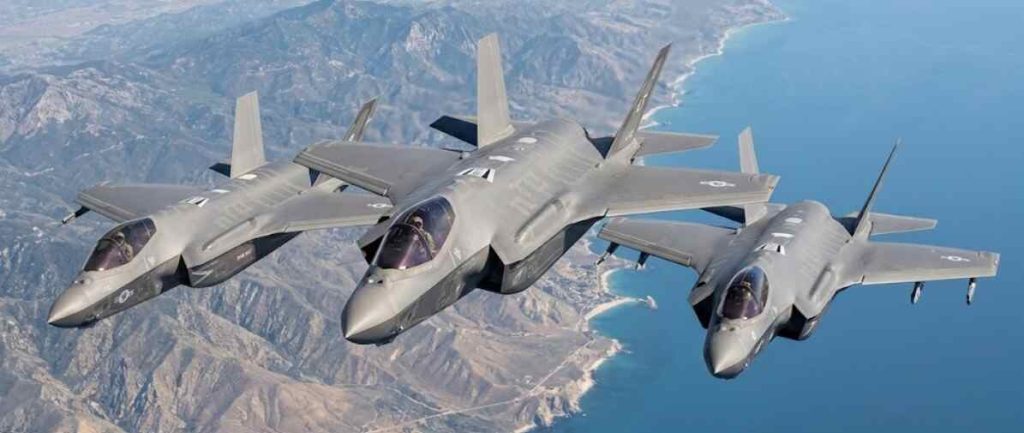
This is something many people don’t realize at first—the F-35 isn’t just one aircraft.
There are three versions, and they exist because different forces have very different needs.
- F-35A – the “standard” version for air forces
- F-35B – can take off from short runways and even land vertically
- F-35C – built for aircraft carriers, with bigger wings and stronger landing gear
The F-35B, in particular, feels almost futuristic when you see it land straight down like a helicopter.
How much does an F-35 fighter jet cost?
This is one of the first questions people ask—and honestly, the answer isn’t as simple as a single price tag.
The cost of the Lockheed Martin F-35 Lightning II depends on the version:
- F-35A: roughly $80–90 million per aircraft
- F-35B: around $100–110 million
- F-35C: about $95–105 million
At first glance, that already sounds expensive. But the real story goes beyond just buying the jet.
The bigger cost behind the scenes
Owning an F-35 involves much more than the aircraft itself:
- Maintenance and spare parts
- Pilot training
- Software updates and support
- Fuel and operational costs
Over its lifetime, a single F-35 can cost hundreds of millions of dollars to operate.
In fact, the overall program—developed by Lockheed Martin—is considered one of the most expensive military projects ever, with total costs reaching into the trillions of dollars when long-term operations are included.
So why do countries still buy it?
Despite the price, many nations see it as an investment in:
- Advanced technology
- Future-ready warfare capability
- Stronger cooperation with allied forces
In simple terms, they’re not just buying a jet—they’re buying into an entire next-generation combat system.
Is it really invisible?
This is probably the most common question—and the answer is no, but it’s complicated.
The F-35 isn’t invisible. What it does is avoid being noticed for as long as possible.
Its shape is carefully designed so radar waves bounce away instead of coming back. On top of that, special coatings help absorb signals. Weapons are hidden inside the aircraft instead of hanging outside.
All of this reduces its “radar signature” dramatically.
But here’s the catch:
- It can still be detected under certain conditions
- Heat from the engine can be tracked
- Advanced air defense systems can sometimes pick it up
So, it’s not invisible—it’s just very hard to see until it’s too late.
What actually makes it special?
If you expect the answer to be speed or maneuverability, you might be surprised.
The F-35’s biggest strength isn’t how fast it flies—it’s how much it knows.
Inside the aircraft, multiple systems are constantly collecting data:
- Radar
- Infrared sensors
- Electronic signals
Instead of showing all this separately, the jet combines it into one clear picture for the pilot. This is called sensor fusion, and it’s a game changer.
Pilots often describe it as going from “information overload” to “total clarity.”
The helmet that changed everything
This feature is really different than your thinking!
Instead of relying on traditional cockpit instruments, the pilot wears a helmet that displays everything directly in front of their eyes. Even more interesting—it connects to cameras around the aircraft.
The result?
The pilot can essentially “see through” the jet, including what’s below or behind.
It sounds like movie scene, but it’s very real!
What about weapons?
To stay stealthy, the F-35 carries most of its weapons inside the aircraft.
These include:
- Air-to-air missiles
- Precision-guided bombs
- Various modern strike weapons
If needed, it can carry more weapons externally—but doing that makes it easier to detect. So there’s always a trade-off between firepower and stealth.
How good is it in a fight?
The F-35 wasn’t built to win dogfights the old-fashioned way.
Instead, its philosophy is simple:
Detect the enemy first, strike first, and avoid being seen.
That said, it’s not helpless in close combat—but that’s not where it shines most.
Compared to older jets like the F-16 Fighting Falcon or F/A-18 Hornet, the F-35 relies far more on information and positioning than raw maneuvering.
Who is using the F-35?
The Lockheed Martin F-35 Lightning II isn’t just an American aircraft anymore—it has quietly become a global platform, used by many allied countries.
What makes it interesting is not just who uses it, but also how large their fleets are and when they brought the aircraft into service.
F-35 Global Operators Overview
| Country | Approx. Fleet Size | Planned Total | Year Introduced |
|---|---|---|---|
| United States | 800+ | ~2,400+ | 2015–2019 |
| United Kingdom | 30+ | 138 | 2018 |
| Italy | 20+ | 90 | 2018 |
| Netherlands | 40+ | 52 | 2019 |
| Australia | 70+ | 72 | 2018 |
| Norway | 52 | 52 | 2017 |
| Denmark | 20+ | 43 | 2021 |
| Israel | 40+ | 75 | 2017 |
| Japan | 40+ | ~147 | 2018 |
| South Korea | 40 | 60 | 2019 |
| Belgium | Deliveries ongoing | 34 | Mid-2020s |
| Poland | On order | 32 | ~2026 (expected) |
| Finland | On order | 64 | 2025 (training phase) |
| Switzerland | On order | 30–36 | Late 2020s |
| Germany | On order | 35 | ~2026 (expected) |
| Singapore | Planned | 20 | Late 2020s |
What this really means
Looking at the table, a bigger picture starts to emerge.
The F-35 is no longer just a single country’s fighter jet—it’s becoming a shared military ecosystem. Countries using it aren’t just buying aircraft; they’re joining a network where information, tactics, and capabilities can be aligned.
In practical terms, this means:
- Better coordination during joint operations
- Real-time data sharing between allies
- More unified air combat strategies
And that’s really where the F-35 stands apart—it’s not just about flying or fighting, but about connecting the battlefield in ways older aircraft never could.
Can it be shot down?
This is an honest question—and the honest answer is yes.
No aircraft is completely safe.
Even the F-35 can be threatened by:
- Advanced missile systems
- Infrared tracking
- Close-range engagements
But compared to older jets, it’s much harder to track, target, and hit.
So… is it worth it?
That depends on how you look at it.
If you judge it like older fighter jets—based on speed or dogfighting—you might miss the point.
The F-35 is really about control of information:
- Seeing more
- Sharing more
- Reacting faster
It changes how air combat works rather than just improving it.
Final thought
The Lockheed Martin F-35 Lightning II isn’t perfect, and it definitely isn’t cheap. But it represents a shift in how modern warfare is approached.
It’s less about who has the fastest jet—and more about who understands the battlefield first.
And in today’s world, that might matter more than anything else.

1 thought on “F-35 Fighter Jet: What Makes It So Talked About?”
Comments are closed.