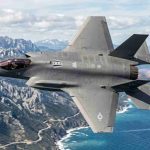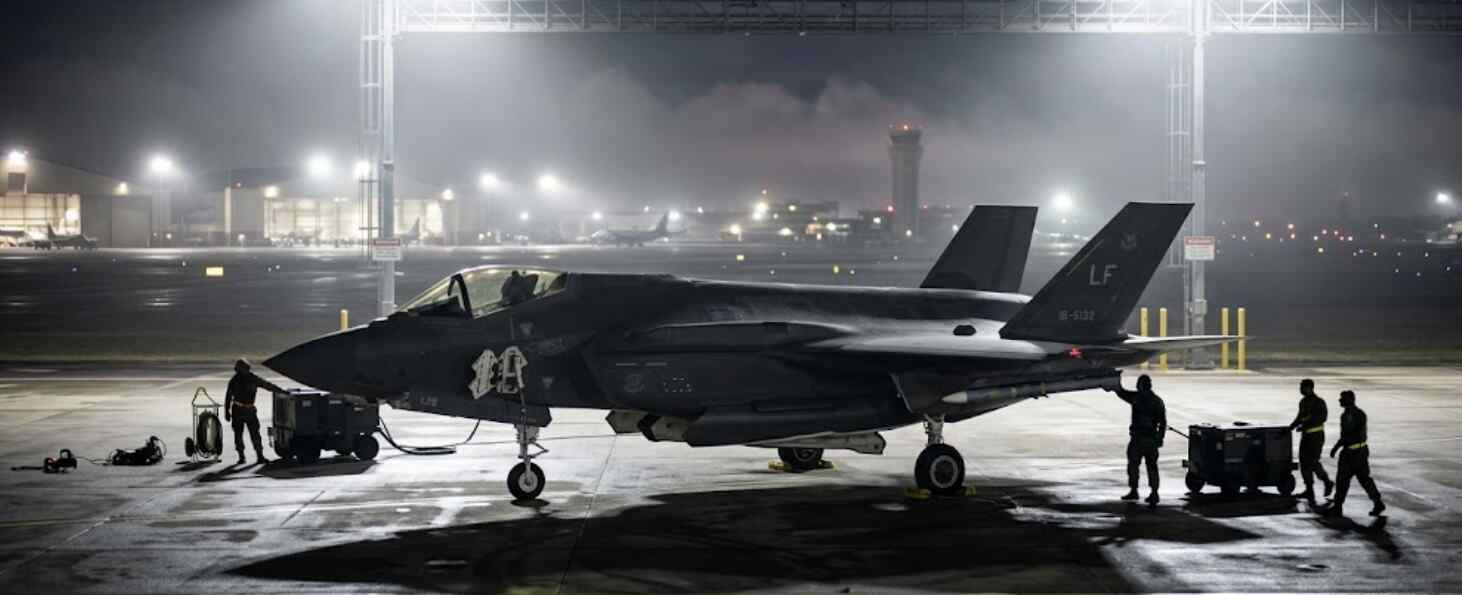
The sky is still dark. On the edge of a quiet airbase, a fighter jet sits under floodlights—silent, yet full of restrained power. In a few minutes, that silence will break into a deafening roar, and a carefully planned mission will unfold at hundreds of knots above the earth.
This is not just a flight. This is an air combat mission.
The Briefing: Where the Mission Begins
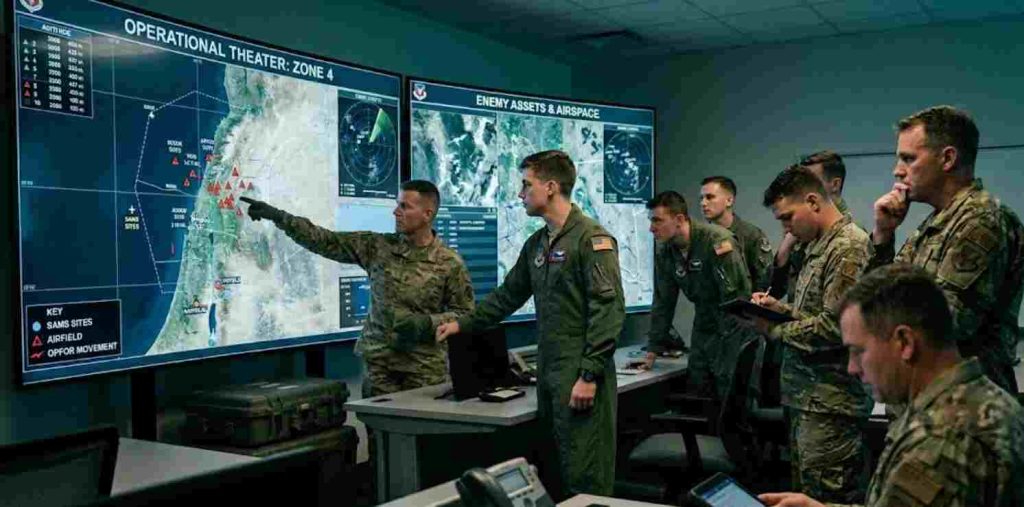
Long before the aircraft leaves the runway, the mission has already started—inside a briefing room. Pilots, intelligence officers, and mission planners gather around digital maps and threat displays.
The objective is clear: strike a high-value target deep inside hostile territory.
The pilot assigned to the mission might be flying an advanced aircraft like the F-35 Lightning II or a battle-proven F-16 Fighting Falcon. But even with cutting-edge technology, success depends on planning.
They study:
- Enemy radar coverage
- Surface-to-air missile (SAM) locations
- Weather conditions
- Fuel calculations and alternate routes
Every second of the mission is mapped. Every possible threat is considered.
Because in combat aviation, uncertainty is the only constant.
Pre-Flight: Trusting the Machine
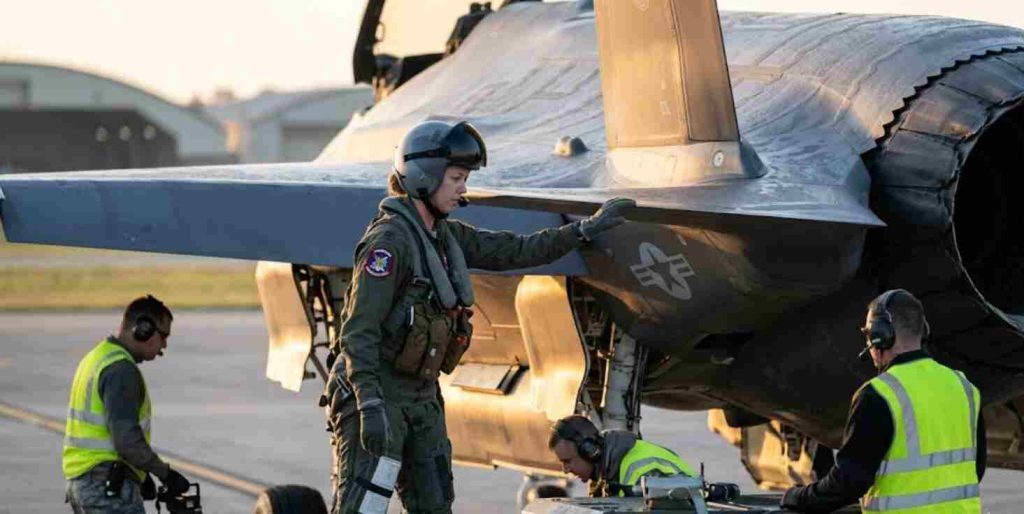
Out on the tarmac, ground crews work with precision. Every panel, sensor, and weapon system is inspected. Missiles are mounted. Fuel tanks are topped off.
The pilot walks around the aircraft—this is the “walk-around inspection.” It’s not just routine; it’s personal. The pilot is about to trust this machine with their life.
Climbing into the cockpit, the world narrows. Screens light up. Systems come alive. The helmet visor drops.
From this moment on, the pilot becomes part of the aircraft.
Takeoff: Breaking the Silence
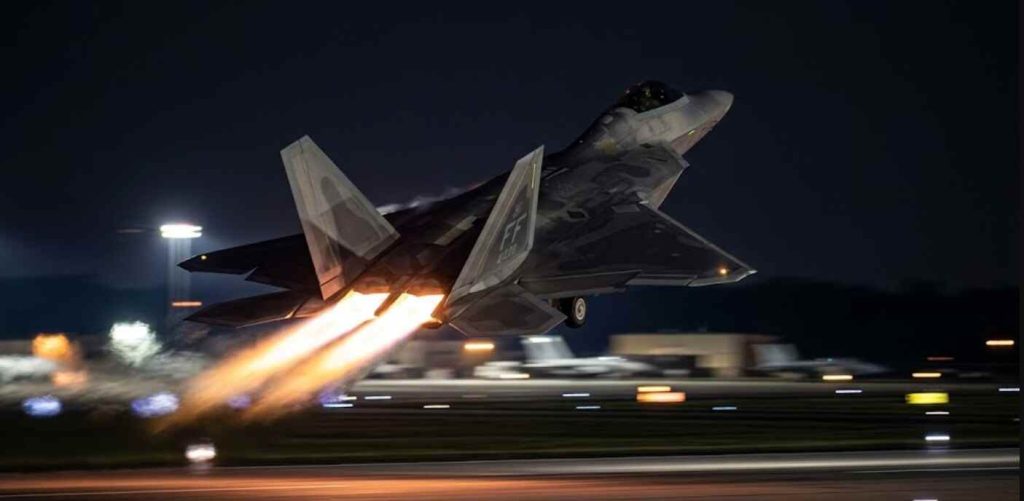
Clearance is given.
The engine spools up with a rising whine that quickly turns into a thunderous roar. The jet accelerates down the runway, faster and faster—until the ground simply falls away.
Within seconds, the aircraft is airborne.
For a fighter like the F-22 Raptor, this climb is almost vertical, disappearing into the sky with unmatched speed and stealth.
But the mission has only just begun.
Ingress: Entering the Danger Zone
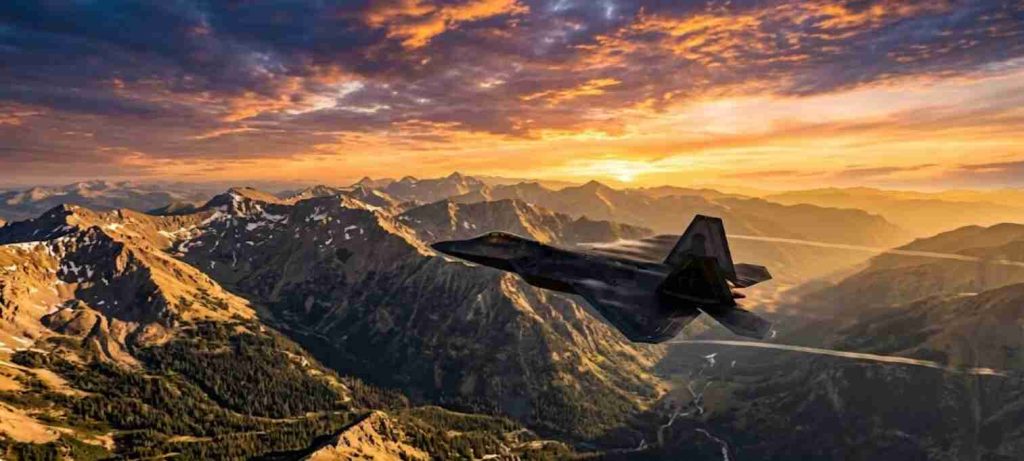
Now comes the most delicate phase: ingress—the journey into enemy territory.
The pilot flies low, sometimes just a few hundred feet above the ground, using terrain to avoid radar detection. In stealth aircraft like the F-35 Lightning II, advanced design and materials help reduce radar visibility.
Inside the cockpit:
- Radar systems scan for threats
- Electronic warfare systems listen for enemy signals
- Data links share real-time information with allied aircraft
The pilot is no longer alone. They are part of a network—an invisible team spread across the sky.
But danger is everywhere.
The Engagement: Seconds That Decide Everything
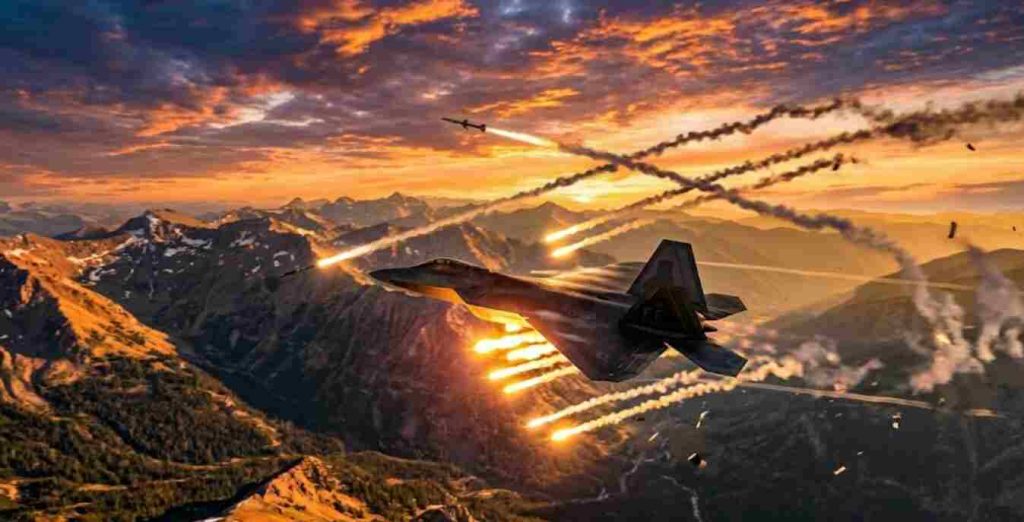
Suddenly, the calm breaks.
A warning tone echoes in the cockpit—enemy radar has detected the aircraft.
The pilot reacts instantly:
- Deploys countermeasures (flares or chaff)
- Changes altitude and direction
- Engages electronic jamming systems
If enemy fighters appear, an air-to-air engagement may begin.
At this point, aircraft like the F-16 Fighting Falcon rely on speed, maneuverability, and precision-guided missiles. In contrast, stealth fighters aim to strike before being seen.
Decisions are made in fractions of a second.
The Strike: Mission Critical Moment
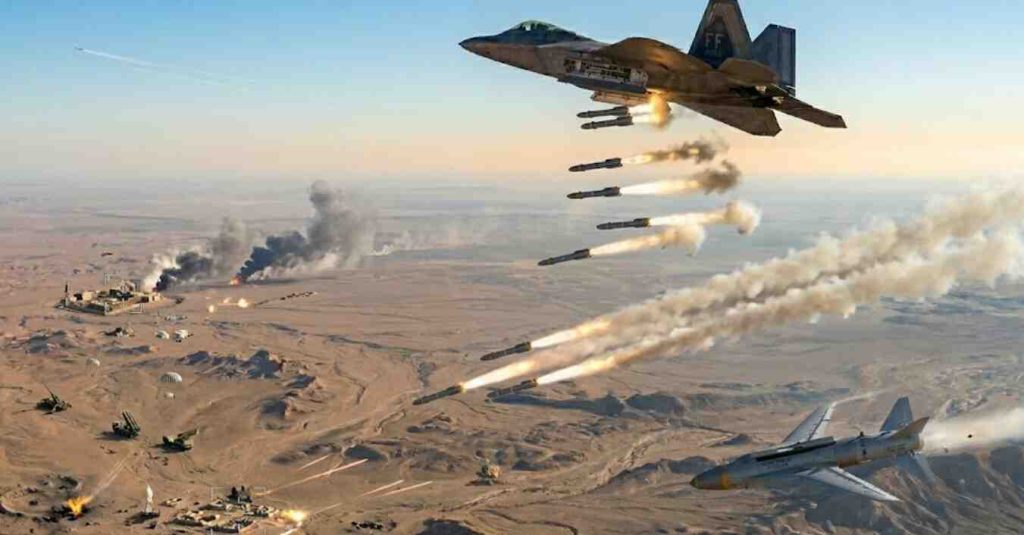
Finally, the target appears.
It could be a radar installation, a weapons depot, or a strategic facility. The pilot aligns the aircraft, guided by advanced targeting systems.
A deep breath.
Weapons release.
Precision-guided munitions drop from the aircraft, guided by GPS or laser systems. Within seconds, they hit the target with devastating accuracy.
The mission objective is complete—but the danger is not over.
Egress: The Race to Safety
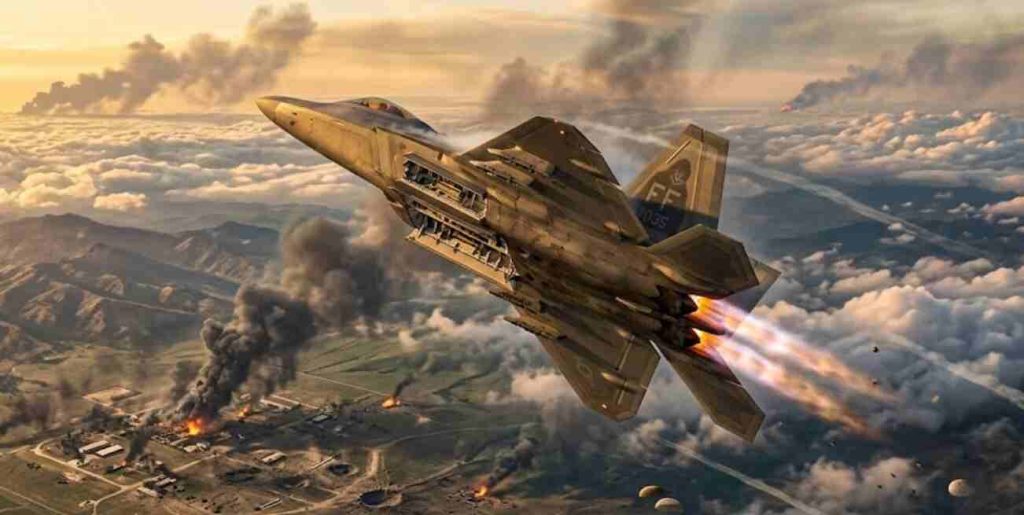
Now comes the escape—egress.
Enemy defenses are fully alert. The skies are no longer quiet. Missiles may be tracking the aircraft.
The pilot pushes the jet to its limits:
- Maximum speed
- Aggressive maneuvers
- Continuous threat monitoring
Every second counts. Every mile matters.
Only when friendly airspace is reached does the tension begin to ease.
Real Combat Examples: When Theory Meets Reality
To truly understand air combat missions, you have to look at real-world operations—where everything you’ve just read becomes reality.
Operation Desert Storm (1991) – The Power of Precision
During the Gulf War, coalition forces launched one of the most coordinated air campaigns in history.
Aircraft like the F-117 Nighthawk flew deep into heavily defended Iraqi airspace during the very first night.
- They avoided radar using stealth technology
- Struck high-value targets in Baghdad
- Returned without being detected
This was one of the first times the world saw how stealth and precision could dominate modern warfare—almost exactly like the ingress and strike phases described earlier.
Kosovo War (1999) – Air Superiority in Action
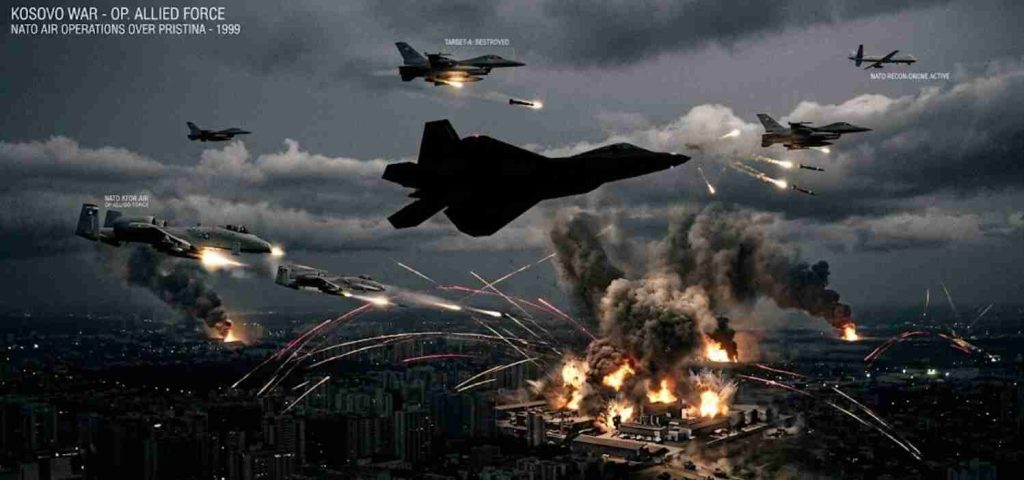
During the Kosovo War, NATO forces conducted continuous air operations against Serbian targets.
A defining moment came when an F-117 Nighthawk was shot down—proving that even stealth aircraft are not invisible.
This highlighted a harsh truth:
In real combat, no system is invincible.
Pilots had to adapt constantly—changing tactics, routes, and altitudes to survive.
Modern Conflicts – Network-Centric Warfare
In recent operations in the Middle East, aircraft like the F-35 Lightning II have redefined air combat missions.
These jets:
- Share data with drones and other aircraft
- Identify targets before being detected
- Strike with extreme precision
The modern battlefield is no longer just pilot vs pilot—it’s a connected system of sensors, aircraft, and intelligence working together.
The Reality Behind the Mission
What makes an air combat mission remarkable is not just the technology—it’s the human element.
Behind every sortie:
- Hours of training
- Years of experience
- Split-second judgment under extreme pressure
Aircraft like the F-35 Lightning II or F-22 Raptor represent the peak of engineering. But they are only as effective as the pilots who fly them.
Final Thoughts
An air combat mission is a story written in speed, precision, and risk. From the quiet tension of the briefing room to the explosive intensity of the strike, every moment is part of a larger narrative.
It is a world where technology meets human courage—
Where silence turns into thunder—
And where every mission is a journey into the unknown.