
A calm cruise at 35,000 feet can change in an instant. A warning light illuminates. A system behaves unexpectedly. Moments later, the captain makes an announcement that instantly captures everyone’s attention:
“Ladies and gentlemen, we will be making an emergency landing.”
To passengers, those words often sound alarming. Yet in aviation, an emergency landing is rarely about panic or loss of control. More often, it is a deliberate, preventive decision, made to keep a manageable situation from becoming a serious one.
This article goes deeper—revealing how emergency decisions are made, what happens behind the cockpit door, and why the aviation system is designed to handle these moments with remarkable discipline and success.
Emergency Landing Does Not Mean Emergency Flying

Remember
an aircraft can be in an emergency while still being fully controllable and safe to fly.
Pilots are trained to treat abnormalities early. A warning message, unusual vibration, medical issue, or system malfunction may not pose immediate danger—but delaying action can increase risk. Declaring an emergency gives the crew:
- Priority handling from Air Traffic Control
- Access to emergency services on the ground
- The safest possible conditions for landing
Aviation history consistently shows that early, conservative decisions lead to the best outcomes.
How Pilots Decide to Declare an Emergency
Emergency declarations follow procedures, not emotions.
Pilots assess:
- Aircraft controllability
- System redundancy
- Weather at nearby airports
- Fuel endurance
- Runway length and emergency support availability
Mayday and Pan-Pan
- Pan-Pan is used for urgent situations without immediate danger
- Mayday is reserved for serious and time-critical threats
Declaring an emergency does not mean something has gone “wrong” — it means the crew is using the safety system exactly as designed.
Inside the Cockpit: What Happens During an Emergency

Contrary to popular belief, emergencies make the cockpit more structured, not more chaotic.
Crew Resource Management (CRM)
Modern cockpit operations are built around CRM:
- One pilot flies the aircraft (Pilot Flying)
- The other manages checklists, communication, and systems (Pilot Monitoring)
- Tasks are verbalized, confirmed, and cross-checked
Pilots rely on the Quick Reference Handbook (QRH) — a carefully engineered decision tool developed from decades of real incidents and simulator testing worldwide.
This disciplined approach is one of the greatest safety improvements in aviation history.
The Cabin Perspective: What Passengers Experience
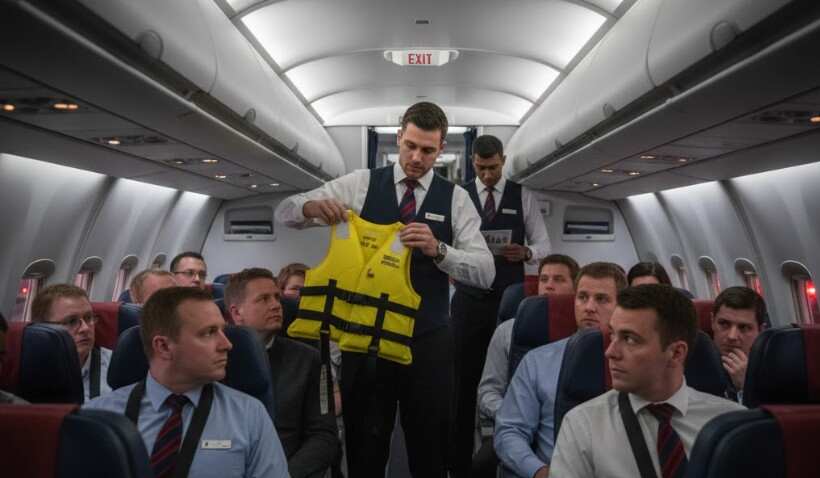
While pilots manage the aircraft, cabin crew manage human safety.
Cabin crew actions include:
- Securing the cabin
- Giving clear safety briefings
- Demonstrating brace positions
- Preparing for possible evacuation
Small details often raise questions:
- Cabin lights are dimmed to help eye adjustment
- Emergency vehicles wait on the runway as a precaution
- Firm instructions are used to maintain order and safety
These steps are rehearsed repeatedly in training and are critical to survival in rare evacuation scenarios.
Aircraft Design: Why Emergency Landings Usually End Safely
Aircraft are not designed to rely on perfect conditions. They are designed to survive failures.
Key safety design principles include:
- Multiple independent hydraulic systems
- Backup electrical power sources
- Fire detection and suppression systems
- Engine redundancy on multi-engine aircraft
- Alternate flight control laws
These features exist because aviation regulations evolve from lessons learned globally—each emergency landing contributes to safer aircraft in the future.
After Emergency Landing
Once the aircraft lands safely, the process continues behind the scenes.
Post-Emergency Actions
- Detailed inspections by licensed engineers
- Mandatory reporting to aviation authorities
- Maintenance checks such as:
- Engine borescope inspections
- Brake and landing gear examinations
- Structural and system evaluations
Every emergency landing becomes data—used to refine training, maintenance programs, and design standards worldwide.
Common Myths About Aircraft Emergency Landings
Let’s separate fact from fiction:
- “Emergency landing means the aircraft almost crashed”
→ Most are precautionary and controlled. - “Pilots panic in emergencies”
→ Pilots train for emergencies more than normal flights. - “Engines fail frequently”
→ Modern engines are among the most reliable machines ever built.
Headlines focus on drama. Aviation focuses on outcomes.
How Rare Are Emergency Landings?
With tens of thousands of flights operating daily, emergency landings are statistically uncommon.
When they do occur, the majority end with:
- No injuries
- Minimal aircraft damage
- Passengers continuing their journey shortly afterward
This is not luck—it is the result of systematic safety design.
Lessons Aviation Has Learned Over Time
Every emergency landing reinforces key principles:
- Early decision-making saves lives
- Communication prevents errors
- Training must never stop
- Maintenance quality is critical
- Procedures exist for a reason
These lessons are written into regulations, manuals, and simulators used across the globe.
What Passengers Should Do If an Emergency Landing Occurs
If you are ever in this situation:
- Stay calm
- Listen carefully to cabin crew
- Follow brace commands
- Leave belongings behind if evacuating
- Move quickly away from the aircraft if instructed
Simple actions make a significant difference.
Final Thoughts
An aircraft emergency landing is not a failure of aviation—it is proof that aviation safety works.
If you want a detailed breakdown of different types of emergency landings and real-world examples, you can explore our earlier article, which complements this one by explaining why these landings occur.
Together, these articles show a reality often missed by headlines:
in aviation, emergencies are anticipated, trained for, and managed—every single day.