In aviation, the cockpit is the nerve center of flight operations, housing critical systems that control the aircraft’s engines, flight controls, navigation, and more. Unintentional or inadvertent movement of any of these cockpit components—particularly those tied directly to safety—can result in catastrophic outcomes.
To mitigate such risks, aircraft manufacturers and regulatory bodies have developed a robust framework of mechanical, procedural, and software-based safeguards.
Recent incidents, including the June 2025 crash of Air India Flight AI171, a Boeing 787-8 Dreamliner, have refocused attention on this issue. This accident has become a tragic example of how even highly automated and modern cockpits are not immune to human factor vulnerabilities—especially involving the unintentional movement of critical controls.
Historical Context and Evolution of Safety Design
Cockpit safety design has evolved significantly over the decades, largely shaped by accident investigations and advances in human factors engineering. Early aircraft designs often lacked protections against accidental control movements, but key incidents over time prompted redesigns and the introduction of safety barriers.
Some pivotal moments include:
Eastern Air Lines Flight 401 (1972): Highlighted the dangers of distraction and poor cockpit resource management.
British Midland Flight 92 (1989): Showed how ambiguous indicators and rushed decisions can lead to critical errors.
Air India Flight AI171 (2025): Brought to the forefront the rare but catastrophic consequence of inadvertent (or unclear) cockpit switch movements, specifically engine fuel cutoffs during takeoff.
Case Study: Air India Flight AI171 Crash (2025)
What Happened
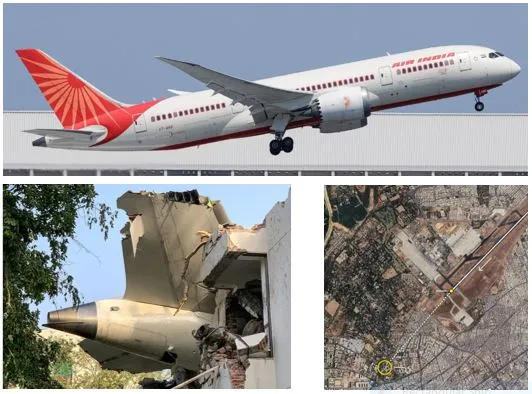
On June 12, 2025, Air India Flight AI171, a Boeing 787-8 Dreamliner, crashed shortly after takeoff from Ahmedabad, India. Shortly after takeoff, the aircraft experienced a total loss of engine power, leading to the deaths of all 241 passengers and crew, as well as 19 individuals on the ground. The aircraft crashed into a nearby residential building just 30 seconds after rotation.
Preliminary findings indicate that both engine fuel control switches were shifted from “RUN” to “CUTOFF” mere seconds after the aircraft became airborne. The action caused immediate engine flameout and loss of thrust. Audio from the cockpit voice recorder revealed that the pilots were confused about the switch movements:
“Why did you cut off?”
“I did not do so.”
Although an engine was temporarily re-engaged, the aircraft’s limited height and kinetic energy made recovery impossible.
Implications for Cockpit Safety Design
Investigators found no mechanical malfunction—the switches appeared to have been moved manually, whether accidentally, intentionally, or as part of an improper procedure. The switches are designed with locking mechanisms, but questions arose around their ergonomics, tactile feel, and susceptibility to human error.
The incident has prompted regulatory scrutiny on:
- The mechanical resistance and guarding of fuel shutoff switches.
- The placement and design of critical controls.
Implementation of prior FAA advisories that recommended enhanced inspection and design review of such switches (which Air India had not enforced).
This crash illustrates the high-stakes consequences of potential flaws in cockpit design and the need for safety features to account for human factors, even in modern, highly automated aircraft like the Boeing 787.
How Manufacturers Prevent Unintentional Movement of Critical Components
1. Mechanical Locks and Detents
Thrust levers, flap selectors, and gear handles feature mechanical detents or gated paths that require deliberate action.
Fuel control switches typically have lift-to-unlock or guarded mechanisms to prevent accidental engagement—though the AI171 crash calls into question their current effectiveness.
2. Guarded and Dual-Action Controls
Emergency controls (like engine fire handles or fuel shutoff switches) are guarded and require an intentional lift, push, or twist to activate.
Critical switch positions may require dual actions (e.g., push then rotate) to reduce the chance of unintentional input.
3. Ergonomic Design and Control Placement
Controls are arranged based on function, frequency of use, and priority, minimizing misidentification.
Color-coding, labeling, and tactile feedback help distinguish critical from non-critical controls.
4. Flight Deck Alerts and System Protections
Systems such as EICAS (Engine Indication and Crew Alerting System) or ECAM provide immediate feedback on engine status, switch positions, and abnormal configurations.
In fly-by-wire aircraft like the B787, software limits certain actions beyond operational limits, but some switches (e.g., fuel shutoff) bypass these protections due to their emergency nature.
5. Certification Standards and Human Factors Testing
Before certification, aircraft must undergo rigorous evaluation by regulators such as the FAA, EASA, and DGCA, including:
- Human factors assessments to identify potential for misoperation.
- Failure Mode and Effects Analysis (FMEA) and Fault Tree Analysis (FTA).
Testing scenarios involving pilot stress, distraction, and workload to determine ergonomic vulnerabilities.
Conclusion
The tragic loss of Air India Flight AI171 underscores the vital importance of designing cockpit systems that not only perform reliably but also protect against unintentional human actions. Despite layers of automation and redundancy, the human-machine interface remains a potential point of failure.
Aircraft manufacturers, in partnership with regulators, must continuously refine cockpit design—addressing both mechanical safeguards and the cognitive realities of pilot behavior under stress. Every switch, lever, or button in the cockpit must be designed not just for functionality, but to anticipate and guard against the unintentional.
As the industry continues to analyze the AI171 crash, it will likely serve as a watershed moment for revisiting cockpit safety design, particularly around critical switch protection, crew procedures, and training. This will ultimately contribute to even safer skies in the years to come.